How AI is Transforming ESG Consulting in 2025

How AI is Transforming ESG Consulting in 2025
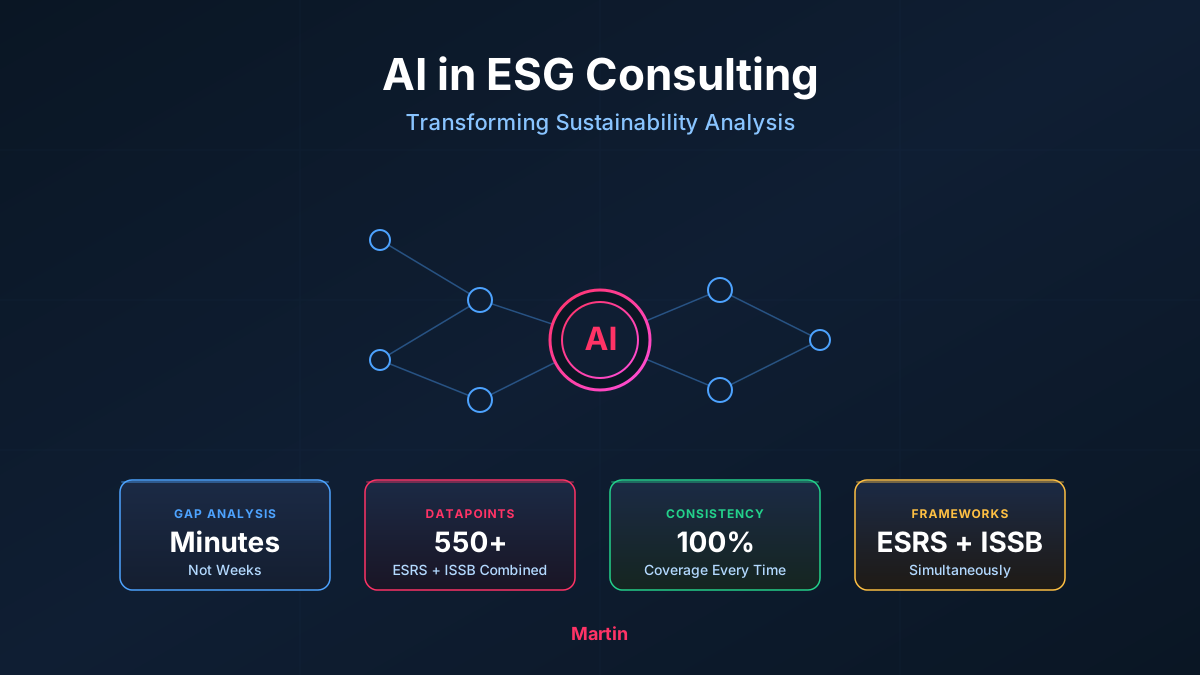
The sustainability consulting industry is undergoing a fundamental transformation. As regulatory frameworks like CSRD and ISSB expand in scope and complexity, the traditional approach—teams of consultants manually reviewing reports page by page—is giving way to AI-powered ESG report analysis that delivers insights in minutes rather than weeks.
This shift isn't about replacing human expertise. It's about augmenting it.
The Challenge: Complexity at Scale
Consider what a sustainability consultant faces today:
- ESRS alone contains 12 standards with hundreds of disclosure requirements
- ISSB adds another layer with IFRS S1 and S2, plus 77 SASB industry standards
- Each client report can run 100-300 pages of dense sustainability content
- Regulatory updates arrive constantly—the November 2025 Omnibus alone reshaped CSRD fundamentally
A thorough gap analysis against these frameworks traditionally requires 40-80 hours of consultant time per report. For firms managing dozens of clients, this creates an impossible bottleneck.
Enter AI: What's Actually Possible Now
AI isn't science fiction in ESG consulting—it's practical technology delivering real value today. Here's what's working:
1. Automated Gap Identification
Modern AI systems can read a sustainability report, understand what's being disclosed, and map it against framework requirements. Instead of a consultant manually checking "Does this report cover E1-4 climate targets?", AI can:
- Extract all climate-related commitments from the report
- Compare them against ESRS E1-4 requirements (base year, target year, Scope coverage, science-based alignment)
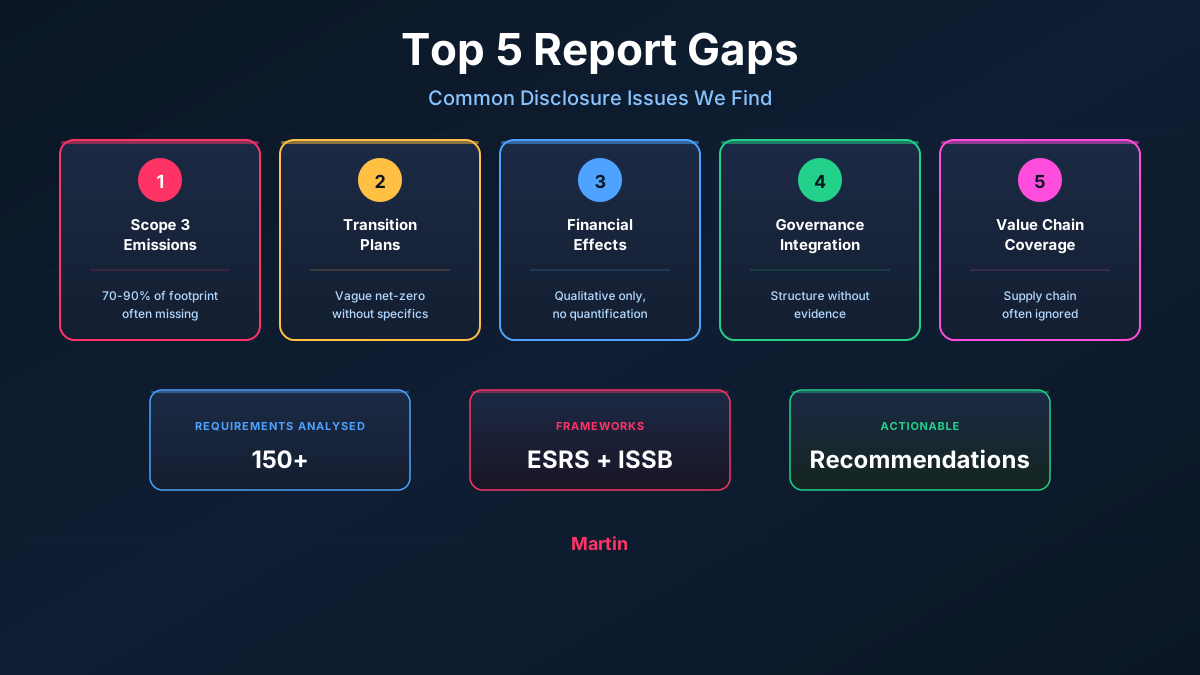
- Identify specific gaps (e.g., "Missing SBTi validation" or "No Scope 3 Category 11 disclosure")
- Generate a prioritised action list
This doesn't replace expert judgment—it accelerates the discovery phase so consultants can focus on recommendations.
2. Multi-Framework Analysis
The real power emerges when analysing against multiple frameworks simultaneously. A company preparing for both CSRD and ISSB compliance needs to know:
- Where do the frameworks overlap?
- Where does one framework require more than the other?
- What's the most efficient path to dual compliance?
AI excels at this kind of systematic comparison across 550+ disclosure datapoints (366 ESRS + 187 ISSB), identifying the specific gaps and overlaps that matter.
3. Structured Insight Generation
Beyond gap identification, AI can generate structured insights:
- Strengths: What the report does well, with specific citations
- Weaknesses: Where disclosures fall short of requirements
- Gaps: Missing topics that should be addressed
- Commitments: Forward-looking statements and targets
This structured output gives consultants a solid foundation for client discussions.
What AI Can't Do (Yet)
Let's be clear about limitations:
Strategic Advice: AI can identify that a company lacks a credible transition plan, but crafting that transition plan requires deep understanding of the company's operations, competitive position, and strategic priorities.
Stakeholder Judgment: Determining what's genuinely material requires stakeholder engagement, industry knowledge, and business context that AI systems don't possess.
Regulatory Interpretation: When frameworks are ambiguous—and they often are—experienced consultants provide the judgment calls that AI cannot.
Client Relationships: Trust, communication, and navigating organisational dynamics remain fundamentally human.
The best outcomes come from AI handling the systematic, repetitive analysis while consultants focus on interpretation, strategy, and client guidance.
Benefits for Sustainability Consultants
Speed to Insight
What took 2-3 weeks can now happen in hours. A preliminary gap analysis that would have consumed a consultant's first week can be ready before the first client meeting. This means your first client conversation can focus on strategic recommendations rather than "here's what we found"—you already know what you found.
Consistency
AI applies the same rigorous methodology every time. No framework requirements get missed because someone was tired on Friday afternoon. Every report gets the same thorough treatment against all 366 ESRS datapoints or 187 ISSB requirements.
Scalability
Firms can handle more clients without proportionally expanding headcount. This is particularly valuable during peak reporting seasons when CSRD deadlines create demand spikes. The maths is simple: if gap analysis takes 40 hours manually and 2 hours with AI, your team's capacity effectively increases 20x for that task.
Focus on Value
When AI handles the mechanical analysis, consultants can spend more time on what clients actually value: strategic recommendations, implementation support, and expert guidance. The work that builds relationships and generates follow-on engagements.
Competitive Differentiation
Consulting firms using AI can offer faster turnaround, more comprehensive coverage, and lower price points—or maintain prices while improving margins. Early adopters are already winning pitches on the basis of AI-powered methodology.
Benefits for In-House Sustainability Teams
Corporate sustainability teams face similar pressures—often with smaller headcount and broader mandates:
Self-Assessment Capability
Before engaging external consultants, teams can run their own gap analysis to understand where they stand. This enables more productive consultant engagements focused on solving problems rather than finding them. You'll know your gaps before the consultant does—and can allocate their expensive hours to where you actually need expert guidance.
Continuous Monitoring
AI enables ongoing assessment rather than annual reviews. As reports are drafted, teams can check compliance in real-time rather than discovering gaps after publication. This is particularly valuable when multiple teams contribute to the sustainability report—you can catch issues before they become embedded.
Benchmarking
Understanding how your disclosures compare to framework requirements—and identifying best practices—helps teams prioritise improvement efforts. When the board asks "are we compliant?", you can answer with specific data rather than professional judgment.
Budget Optimisation
External ESG consulting engagements can run £50,000-200,000+ for comprehensive assessments. AI tools costing a fraction of that can handle the systematic analysis, letting you reserve consultant budget for strategic advisory work where human expertise is irreplaceable.
Internal Credibility
Sustainability teams that can demonstrate rigorous, methodology-driven assessment processes build stronger relationships with finance, legal, and the board. AI tools provide the audit trails and documentation that internal stakeholders expect.
The 2025 Landscape
Several trends are shaping AI adoption in ESG consulting:
Regulatory Pressure
With CSRD's phased rollout (2025-2028) and ISSB adoption accelerating globally, the volume of compliance work is increasing faster than the consulting workforce can grow. AI adoption isn't optional—it's necessary.
Quality Expectations
Stakeholders increasingly expect sustainability reports to be comprehensive, consistent, and comparable. AI helps achieve the systematic coverage that manual processes struggle to deliver.
Assurance Requirements
CSRD requires external assurance of sustainability reports. AI-generated analysis with clear audit trails supports the assurance process by documenting how gap assessments were conducted.
Data Integration
As sustainability reporting matures, AI systems are increasingly connected to data platforms, enabling automated checking of not just disclosures but underlying data quality.
Getting Started
For consultants considering AI tools:
- Start with gap analysis — This is where AI delivers immediate, measurable value
- Maintain human oversight — AI findings should inform, not replace, consultant judgment
- Focus on frameworks you know — AI is most useful when you can validate its output
- Build client confidence gradually — Show how AI accelerates your work without changing your expertise
For corporate teams:
- Run a self-assessment first — Understand your gaps before engaging consultants
- Use AI for preparation — Come to consultant meetings with specific questions, not open-ended requests
- Integrate with your workflow — AI works best as part of an ongoing process, not a one-time exercise
Key Takeaways
- AI accelerates, not replaces — The goal is augmenting consultant expertise, not eliminating it
- Gap identification is the killer app — Systematic framework analysis is where AI delivers immediate value
- Multi-framework analysis at scale is now practical — Comparing ESRS, ISSB, and SASB simultaneously
- Quality and consistency improve — AI applies the same rigorous methodology every time
- Human judgment remains essential — Strategy, stakeholder engagement, and client relationships are irreplaceable
Experience AI-Powered ESG Analysis
Martin AI represents the next generation of sustainability report analysis. Built by consultants with 8+ years of ESG advisory experience, it combines deep framework knowledge with AI capabilities to deliver comprehensive gap analysis in minutes.
Try Martin AI - Upload your sustainability report and experience AI-powered analysis against 550+ ESRS and ISSB disclosure datapoints.
For framework-specific guidance, see our CSRD guide, ESRS vs ISSB comparison, or materiality guide.
Enjoyed this article?
Get weekly ESG insights delivered to your inbox. Join The Sustainability Signal.
No spam. Unsubscribe anytime.