Understanding CSRD: What It Means for Your Sustainability Reporting

Understanding CSRD: What It Means for Your Sustainability Reporting
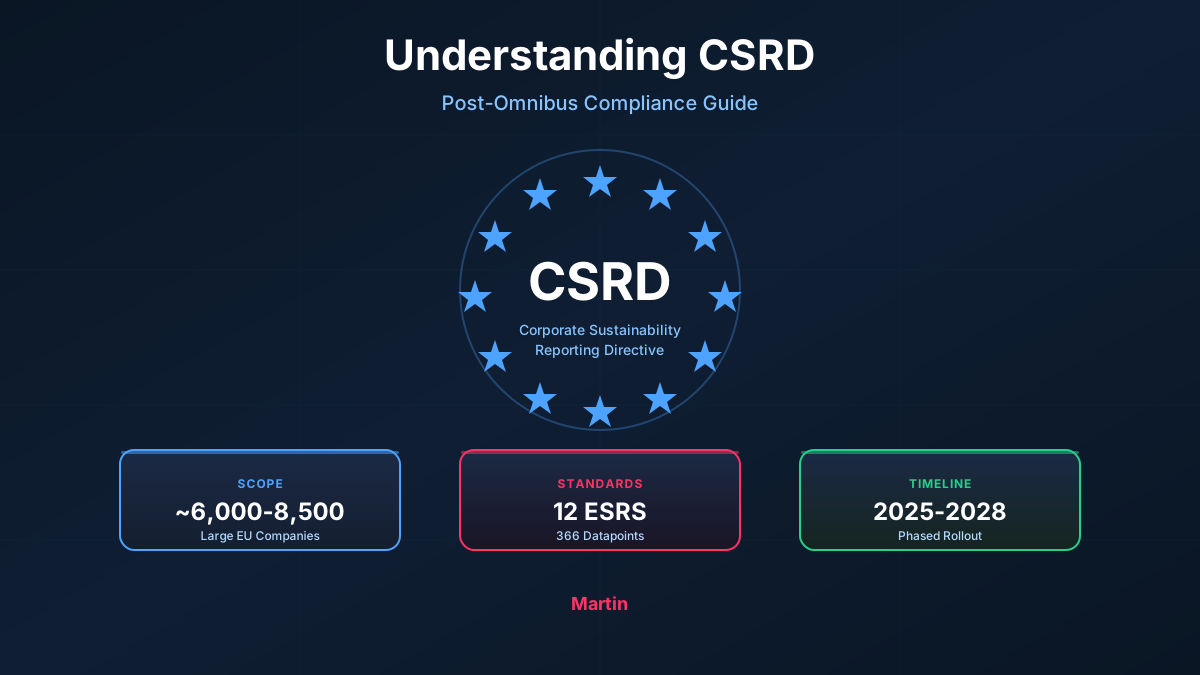
The Corporate Sustainability Reporting Directive (CSRD) represents the most significant overhaul of sustainability reporting requirements in the European Union's history. If you're conducting a CSRD gap analysis or preparing for compliance, understanding what's changed—especially after the December 2025 Omnibus agreement—is essential.
This guide covers everything you need to know about CSRD compliance in its current, simplified form.
What is CSRD?
The Corporate Sustainability Reporting Directive is EU legislation that mandates comprehensive sustainability disclosures from large companies operating in or connected to the European market. Adopted in late 2022 and significantly refined through the 2025 Omnibus package, CSRD replaces the earlier Non-Financial Reporting Directive (NFRD) with far more detailed requirements.
At its core, CSRD requires companies to report on:
- Environmental impacts — Climate change, pollution, water, biodiversity, and circular economy
- Social matters — Workforce conditions, value chain workers, affected communities, and consumers
- Governance — Business conduct, anti-corruption, and board oversight of sustainability
Unlike its predecessor, CSRD mandates the use of standardised reporting frameworks (ESRS), external assurance, and digital tagging for machine-readability.
The Omnibus Simplification: A Major Shift
The December 2025 Omnibus agreement fundamentally transformed CSRD implementation. If you're reading older guidance, much of it is now outdated.
Key Changes
Dramatically Reduced Scope: The number of in-scope companies dropped from approximately 50,000 to a much smaller set of large EU companies meeting both thresholds: over 1,000 employees AND over EUR 450 million turnover. Listed SMEs have been removed from scope entirely. Many companies that expected to report under CSRD are no longer required to do so.
Simplified Materiality Assessment: The double materiality process—while still required—has been streamlined with clearer thresholds and more proportionate requirements. Companies no longer need to conduct exhaustive assessments across all possible topics.
Fewer Mandatory Datapoints: The framework has been streamlined—the total page count across all standards reduced by approximately 14%. Many disclosure requirements have been made voluntary or sector-specific, with core mandatory disclosures focused on genuinely material information rather than an exhaustive checklist. The 12 ESRS standards now contain approximately 320 core datapoints, with many conditional on materiality.
Value Chain Cap: Companies with fewer than 1,000 employees are protected from excessive sustainability information requests from larger supply chain partners. Large reporters can only request information per the Voluntary SME Standard (VSME).
Permanent Limited Assurance: The original requirement to transition from limited to reasonable assurance by 2028 has been permanently removed. This significantly reduces compliance costs.
Disclosure Simplifications: Several specific disclosure requirements were removed or simplified. For example, G1 (Business Conduct) no longer requires disclosure of all corruption or bribery incidents—only convictions, sanctions, and fines must be reported.
Who Must Comply?
Post-Omnibus, CSRD applies to a narrower set of companies:
Definitely In Scope
Large EU Public-Interest Entities (reporting from 2025, due 2026):
- Listed companies, banks, and insurers
- More than 1,000 employees on average
- Over EUR 450 million net turnover
Other Large EU Companies (reporting from 2026, due 2027):
- Meeting both revised thresholds (>1,000 employees AND >EUR 450M turnover)
Note: Listed SMEs have been removed from CSRD scope under the December 2025 Omnibus agreement.
Non-EU Companies
Non-EU companies may still be in scope if they have:
- Significant EU presence (subsidiary meeting large company thresholds)
- EU net turnover exceeding €150 million
- At least one EU subsidiary or branch meeting specific criteria
Likely Out of Scope (Post-Omnibus)
- SMEs not listed on regulated markets
- Companies previously caught only by group-level thresholds
- Many companies in the original "second wave" of CSRD reporters
Action item: If you assumed CSRD applied to you based on pre-Omnibus guidance, verify your status under the revised thresholds before investing in compliance infrastructure.
Implementation Timeline (Post-Omnibus)
| Reporting Year | Report Due | Who Reports |
|---|---|---|
| 2025 | 2026 | Large public-interest entities (>1,000 employees & >EUR 450M turnover) |
| 2026 | 2027 | Other large EU companies meeting both thresholds |
Reports must be published as part of the company's management report, digitally tagged using the European Single Electronic Format (ESEF), and accompanied by limited assurance from an external auditor.
CSRD and ESRS: The Reporting Standards
CSRD is the legislation; ESRS (European Sustainability Reporting Standards) are the detailed reporting standards that tell you what to disclose.
The 12 ESRS Standards
| Standard | Focus | Datapoints | Always Required? |
|---|---|---|---|
| ESRS 1 | General Requirements | 37 | Yes |
| ESRS 2 | General Disclosures | 81 | Yes |
| E1 | Climate Change | 84 | If material |
| E2 | Pollution | 14 | If material |
| E3 | Water & Marine Resources | 13 | If material |
| E4 | Biodiversity & Ecosystems | 14 | If material |
| E5 | Circular Economy | 20 | If material |
| S1 | Own Workforce | 44 | If material |
| S2 | Workers in Value Chain | 15 | If material |
| S3 | Affected Communities | 13 | If material |
| S4 | Consumers & End-Users | 12 | If material |
| G1 | Business Conduct | 19 | If material |
ESRS 1 sets out the general principles (how to report), while ESRS 2 contains disclosures that all in-scope companies must provide regardless of materiality—governance structures, strategy, materiality assessment process, and how sustainability matters are integrated into business operations.
The topical standards (E1-E5, S1-S4, G1) apply based on your double materiality assessment. Post-Omnibus, the assessment process is simpler, and companies have more flexibility in determining what's material.
Double Materiality: The ESRS Approach
ESRS requires companies to assess materiality from two perspectives:
Impact Materiality (Inside-Out)
How do your operations affect people and the environment? Consider:
- Direct impacts from your operations
- Impacts through your value chain
- Positive and negative effects
- Actual and potential impacts
Financial Materiality (Outside-In)
How do sustainability matters affect your financial performance? Consider:
- Risks to revenue, costs, or assets
- Opportunities for growth or efficiency
- Short, medium, and long-term time horizons
- Likelihood and magnitude of effects
A topic is material under ESRS if it meets either threshold—unlike ISSB's single (financial) materiality approach.
Post-Omnibus, the materiality assessment has clearer thresholds and is more proportionate, meaning fewer topics may qualify as material for smaller in-scope companies.
Common CSRD Compliance Gaps
Based on our analysis of sustainability reports, here are the most common areas where companies fall short:
1. Climate Transition Plans
Many reports mention net-zero commitments but lack specific decarbonisation levers, financial planning (CapEx/OpEx allocation), or alignment with 1.5°C pathways.
2. Scope 3 Emissions
Scope 1 and 2 emissions are typically disclosed, but Scope 3 (value chain emissions) remains patchy—particularly categories 1, 11, and 15.
3. Value Chain Visibility
Post-Omnibus, the value chain cap protects smaller suppliers, but reporters still need visibility into material impacts from significant value chain partners.
4. Governance Integration
ESRS 2 requires disclosure of how sustainability is integrated into board oversight and executive remuneration. Many companies describe structures but lack specifics on KPIs linked to pay.
5. Financial Effects Quantification
ESRS requires disclosure of current and anticipated financial effects of sustainability matters. Most reports provide qualitative discussion but avoid quantification.
Getting Started: Your CSRD Compliance Roadmap
Step 1: Confirm Your Scope Status
Before investing in compliance, verify whether your company falls within the post-Omnibus thresholds. Many companies that expected CSRD obligations are no longer in scope.
Step 2: Conduct a Streamlined Materiality Assessment
Use the simplified double materiality process to identify which ESRS topical standards apply. Focus on genuinely material topics rather than attempting to cover everything.
Step 3: Gap Analysis Against ESRS
Compare your current disclosures against applicable ESRS requirements. Identify where you have data, where you need to collect data, and where you have genuine gaps.
Step 4: Build Data Infrastructure
CSRD requires consistent, auditable data. Establish data collection processes for material topics, particularly emissions data, workforce metrics, and governance information.
Step 5: Prepare for Assurance
Your sustainability report will require limited assurance from an external auditor. Ensure your data and processes are audit-ready.
Key Takeaways
- CSRD scope has narrowed significantly post-Omnibus—verify your status before investing heavily in compliance
- Double materiality remains but with a simpler, more proportionate assessment process
- ESRS 1 and 2 always apply; topical standards depend on your materiality assessment
- Limited assurance is permanent—the transition to reasonable assurance has been removed
- Value chain caps protect SMEs from excessive reporting requests
- Timelines are phased: from 2025 depending on company type
Ready to Assess Your CSRD Readiness?
Understanding where your sustainability report stands against CSRD/ESRS requirements is the first step toward compliance. Martin analyzes your report against all ESRS disclosure requirements—updated for the December 2025 Omnibus simplification—identifying gaps and providing actionable recommendations.
Check Your CSRD Readiness - Upload your sustainability report and get instant gap analysis against ESRS requirements.
For a comparison of ESRS with other frameworks, see our ESRS vs ISSB comparison. For information on global standards, explore our ISSB/IFRS guide. For understanding double materiality, see our materiality guide.
Enjoyed this article?
Get weekly ESG insights delivered to your inbox. Join The Sustainability Signal.
No spam. Unsubscribe anytime.
Related Articles
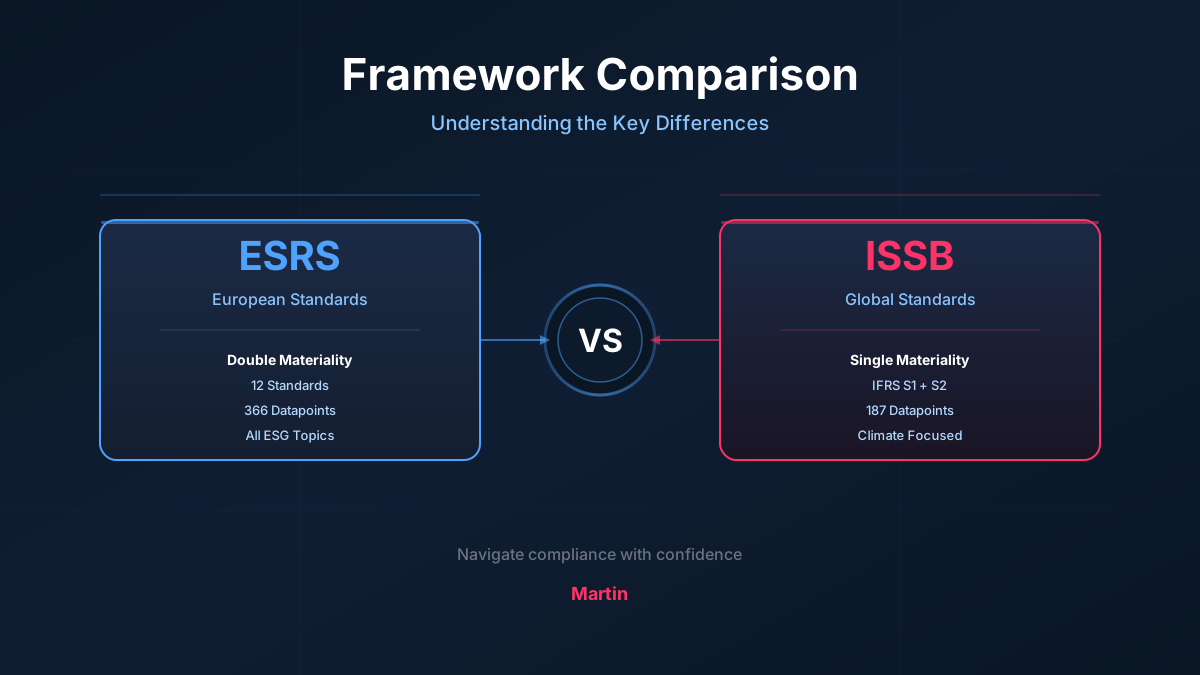
ESRS vs ISSB: Understanding the Two Major Sustainability Standards
A practical comparison of ESRS and ISSB frameworks post-Omnibus simplification, covering double vs single materiality and compliance strategies.
Martin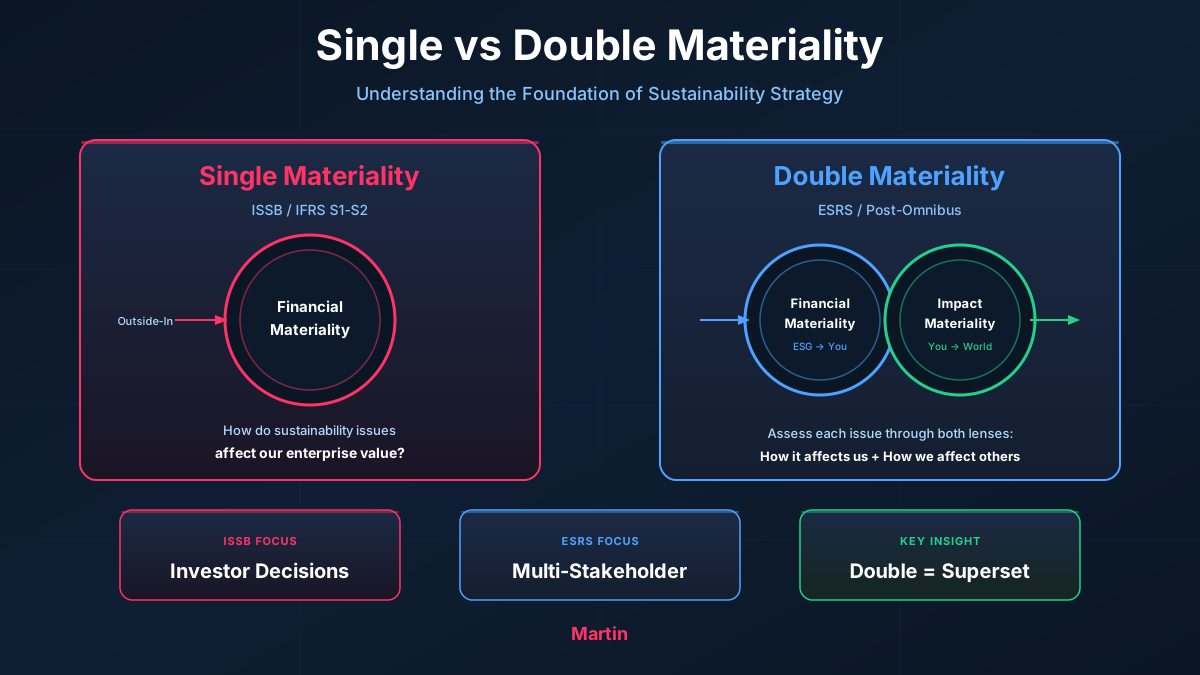
Single vs Double Materiality: A Practical Guide for Sustainability Reporters
Understanding the fundamental difference between ISSB's single materiality and ESRS's double materiality—and how each shapes your sustainability strategy.
Martin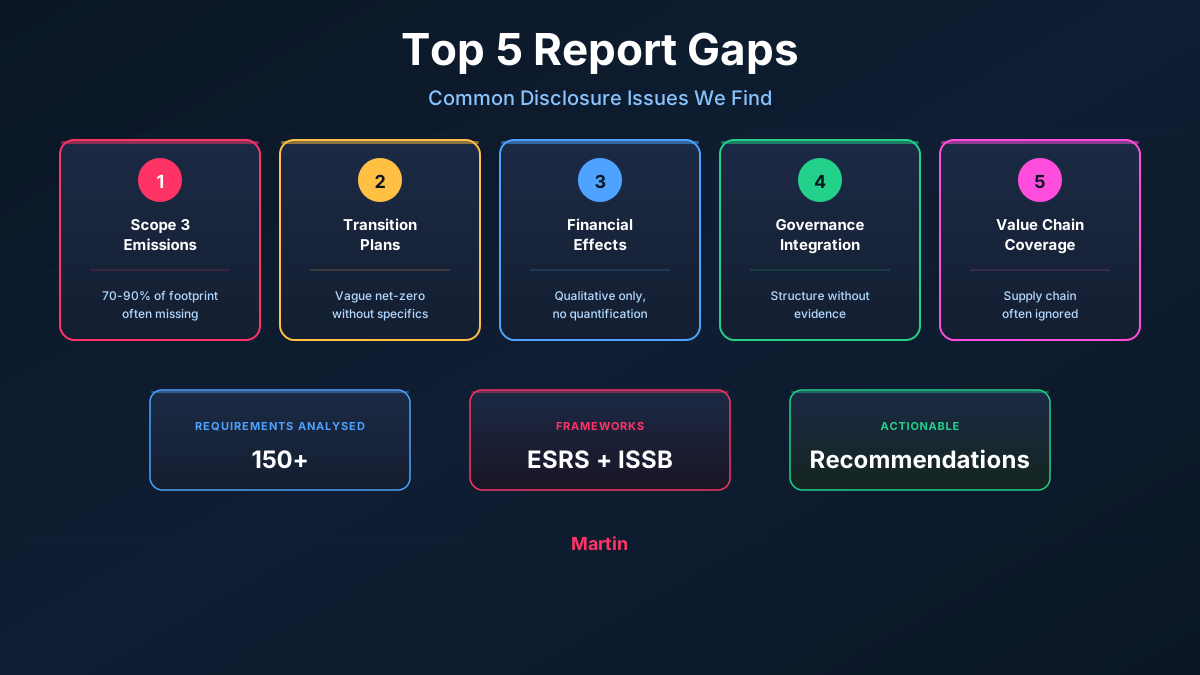
Top 5 Gaps We Find in Sustainability Reports
The most common disclosure gaps we identify when analysing sustainability reports against ESRS and ISSB requirements—and how to fix them.
Martin