ISSB/IFRS S1 & S2: A Practical Guide for Reporters

ISSB/IFRS S1 & S2: A Practical Guide for Reporters
The International Sustainability Standards Board (ISSB) has established what's quickly becoming the global baseline for sustainability disclosure. If you're seeking ISSB reporting software or conducting an IFRS S1 S2 gap analysis, this guide covers everything you need to know about compliance in 2026.
What is the ISSB?
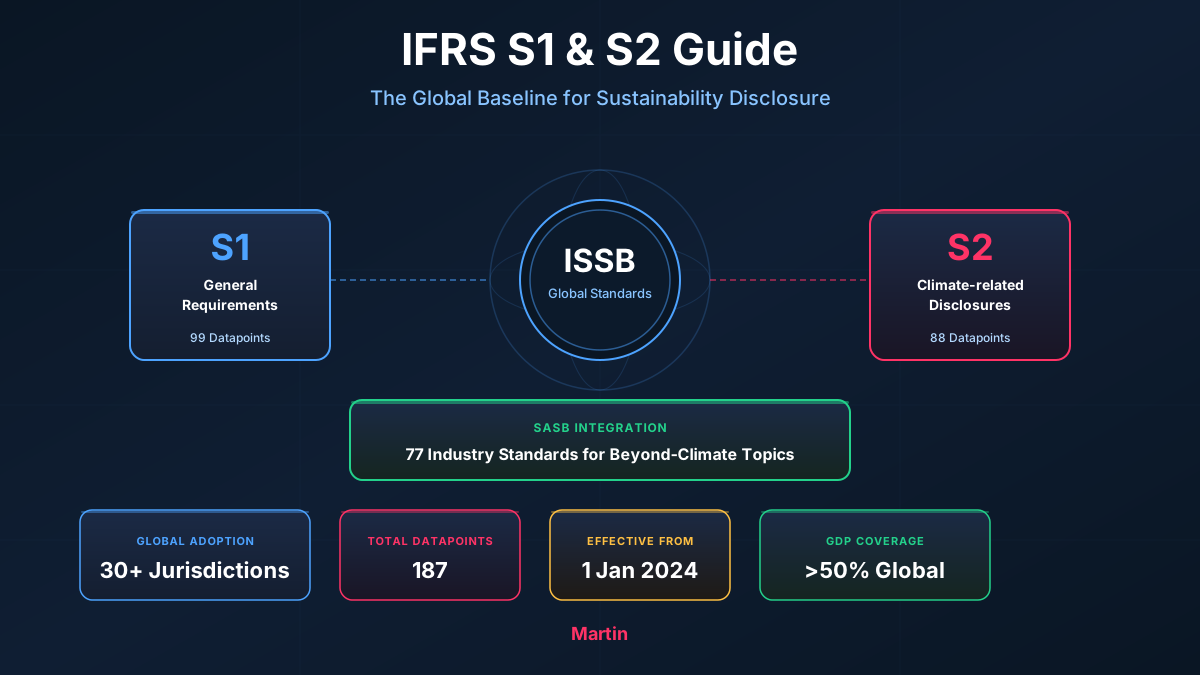
The International Sustainability Standards Board was established by the IFRS Foundation in November 2021, bringing together the momentum of TCFD, SASB, and the CDSB into a single standard-setting body. The goal: create a global baseline for sustainability disclosures focused on investor decision-making.
In June 2023, the ISSB released its first two standards:
- IFRS S1: General Requirements for Disclosure of Sustainability-related Financial Information (99 datapoints)
- IFRS S2: Climate-related Disclosures (88 datapoints)
Together, these 187 datapoints form the global baseline for sustainability disclosure. The standards are effective for annual periods beginning on or after 1 January 2024, with adoption accelerating across 35+ jurisdictions representing over half of global GDP.
IFRS S1: General Requirements
IFRS S1 provides the foundation for all sustainability-related disclosures under the ISSB framework. It establishes:
Core Principles
Single Materiality Focus: Unlike ESRS's double materiality, ISSB focuses exclusively on information that could reasonably be expected to influence investor decisions. A sustainability matter is material if omitting or misstating it could affect how investors assess enterprise value.
TCFD Architecture: S1 adopts the four-pillar structure from the Task Force on Climate-related Financial Disclosures:
- Governance
- Strategy
- Risk Management
- Metrics and Targets
Connected Information: Disclosures must show connections between sustainability risks/opportunities and financial statements.
What S1 Requires
| Pillar | Datapoints | Key Disclosures |
|---|---|---|
| General Requirements | 35 | Core disclosure principles and materiality |
| Governance | 11 | Board oversight; management's role in assessing and managing risks/opportunities |
| Strategy | 26 | Risks and opportunities; business model effects; financial position; resilience |
| Risk Management | 11 | Identification and assessment processes; integration with overall risk management |
| Metrics & Targets | 16 | Cross-industry metrics; industry-specific metrics (via SASB); targets and progress |
The SASB Connection
Here's where it gets important: IFRS S1 requires companies to consider SASB Standards when identifying sustainability-related risks and opportunities beyond climate.
SASB Standards—covering 77 industries across 11 sectors—are now under ISSB oversight following the 2022 merger of the Value Reporting Foundation into the IFRS Foundation. This means:
- SASB is effectively mandatory for ISSB reporters addressing topics beyond climate
- Industry-specific guidance covers water, workforce health, data security, and more
- The ISSB is actively enhancing SASB Standards with comprehensive reviews underway
If you're applying IFRS S1, you need to know your relevant SASB industry standard.
IFRS S2: Climate-related Disclosures
IFRS S2 provides detailed requirements specifically for climate-related risks and opportunities. It's always applied alongside S1.
Climate-Specific Requirements
Physical Risks: Acute (event-driven) and chronic (longer-term) climate impacts on operations, assets, and value chains.
Transition Risks: Policy and legal changes, technology shifts, market changes, and reputational considerations related to the transition to a lower-carbon economy.
Climate Opportunities: Potential positive effects from climate change—resource efficiency, new products/services, market access, resilience.
Key S2 Disclosures
| Area | Requirements |
|---|---|
| Scenario Analysis | Climate scenarios used, time horizons, inputs/assumptions, business implications |
| Transition Plans | Targets, decarbonisation levers, resource allocation, board accountability |
| GHG Emissions | Scope 1, Scope 2 (location and market-based), Scope 3 across 15 categories |
| Climate Targets | Emission reduction targets, timeframes, third-party validation (e.g., SBTi) |
| Carbon Credits | Use of carbon offsets and removals in achieving targets |
Scope 3: The Full Picture
IFRS S2 requires disclosure of all 15 Scope 3 categories where material. This is one of the most demanding aspects of ISSB compliance:
Upstream Categories (1-8): Purchased goods/services, capital goods, fuel/energy, transportation, waste, business travel, employee commuting, leased assets
Downstream Categories (9-15): Transportation, processing, use of sold products, end-of-life treatment, leased assets, franchises, investments
The "financed emissions" category (Category 15) is particularly significant for financial institutions.
Global Adoption Status
ISSB standards are gaining rapid traction globally. As of early 2026:
Mandatory Adoption
| Jurisdiction | Status | Effective From |
|---|---|---|
| UK | UK SRS standards published for voluntary use; mandatory requirements pending legislation | 2026+ |
| Singapore | ISSB-aligned climate disclosures mandatory (SGX); broader S1 encouraged | 2025 |
| Hong Kong | Comply-or-explain from 2025; mandatory for Large Cap issuers from 2026 | 2025-2026 |
| Australia | Mandatory climate reporting (AASB S2-aligned) phased rollout | 2025-2027 |
| Brazil | Mandatory for listed companies | 2026 |
| Japan | SSBJ standards issued March 2025; mandatory for largest companies | FY ending March 2027 |
Voluntary/Endorsed
| Jurisdiction | Status |
|---|---|
| EU | Interoperability with ESRS confirmed |
| Canada | Voluntary adoption encouraged |
| South Africa | JSE recommending adoption |
| Malaysia | Phased adoption pathway |
Countries representing over 50% of global GDP have announced ISSB adoption pathways, making it the de facto global standard outside the EU.
ISSB vs ESRS: Key Differences
| Dimension | ISSB | ESRS |
|---|---|---|
| Materiality | Single (financial) | Double (financial + impact) |
| Scope | Climate-focused + SASB for beyond-climate | All ESG topics |
| Assurance | Jurisdiction-dependent | Limited assurance (permanent) |
| Geographic Focus | Global baseline | EU-centric (with third-country rules) |
| Industry Guidance | SASB Standards (77 industries) | Sector standards in development |
For companies subject to both frameworks, the good news is significant overlap in climate disclosures. ESRS and ISSB have committed to interoperability, and mapping guidance exists for dual compliance.
Common Compliance Gaps
Based on our analysis of reports against ISSB requirements:
1. Incomplete Scope 3
Most companies disclose Scopes 1 and 2, but Scope 3 remains patchy. Categories 1 (purchased goods), 11 (use of sold products), and 15 (investments) are most commonly missing.
2. Weak Scenario Analysis
Many reports describe climate scenarios qualitatively but don't quantify business implications or test strategy resilience under different pathways.
3. Missing SASB Metrics
Companies often focus on climate (S2) while neglecting the broader sustainability risks that SASB covers—water stress, workforce health, data security.
4. Vague Transition Plans
Net-zero commitments without specific decarbonisation levers, timelines, or capital allocation aren't sufficient for S2 compliance.
5. Disconnected Information
ISSB emphasises connectivity—showing how sustainability risks affect financial statements. Many reports treat sustainability and financial information as separate.
Getting Started with ISSB
Step 1: Identify Your SASB Industry
Start by finding your relevant SASB industry standard. This determines which beyond-climate topics you need to address under IFRS S1.
Step 2: Climate Risk Assessment
Conduct a thorough assessment of physical and transition risks. This forms the foundation for your S2 disclosures.
Step 3: Scope 3 Inventory
Map your value chain and identify which Scope 3 categories are material. This often requires supplier engagement.
Step 4: Gap Analysis
Compare your current disclosures against S1 and S2 requirements. Identify data gaps, process gaps, and disclosure gaps.
Step 5: Build Connectivity
Ensure your sustainability disclosures connect to your financial statements—showing how climate risks affect asset values, provisions, and cash flows.
What's Coming Next
The ISSB isn't standing still:
IFRS S3 (Biodiversity/BEES): Moved from research to active standard-setting in January 2026. Will address nature-related risks and opportunities aligned with TNFD.
IFRS S4 (Human Capital): Still in the research phase as part of the 2024-2026 work plan, covering workforce-related risks including DEI, health and safety, and labour practices.
Enhanced SASB Standards: Exposure drafts for amendments published July 2025 covering 9 priority industries and 41 targeted standards. Enhancements expected in 2026.
Key Takeaways
- ISSB is the global baseline — 35+ jurisdictions adopting, representing over 50% of global GDP
- Single materiality focus — Material if it could influence investor decisions
- SASB is integral — Required for beyond-climate topics under IFRS S1
- Scope 3 is mandatory — All 15 categories where material
- Interoperability with ESRS — Mapping guidance exists for dual compliance
- New standards coming — S3 (biodiversity) in active standard-setting; S4 (human capital) in research
Check Your ISSB Readiness
Understanding where your sustainability report stands against ISSB requirements is the first step toward compliance. Martin analyzes your report against IFRS S1, S2, and relevant SASB Standards, identifying gaps and providing actionable recommendations.
Analyze Your ISSB Compliance - Upload your sustainability report and get instant gap analysis against ISSB requirements.
For EU-specific requirements, see our CSRD guide. For a framework comparison, explore our ESRS vs ISSB analysis. For understanding single materiality, see our materiality guide.
Enjoyed this article?
Get weekly ESG insights delivered to your inbox. Join The Sustainability Signal.
No spam. Unsubscribe anytime.
Related Articles
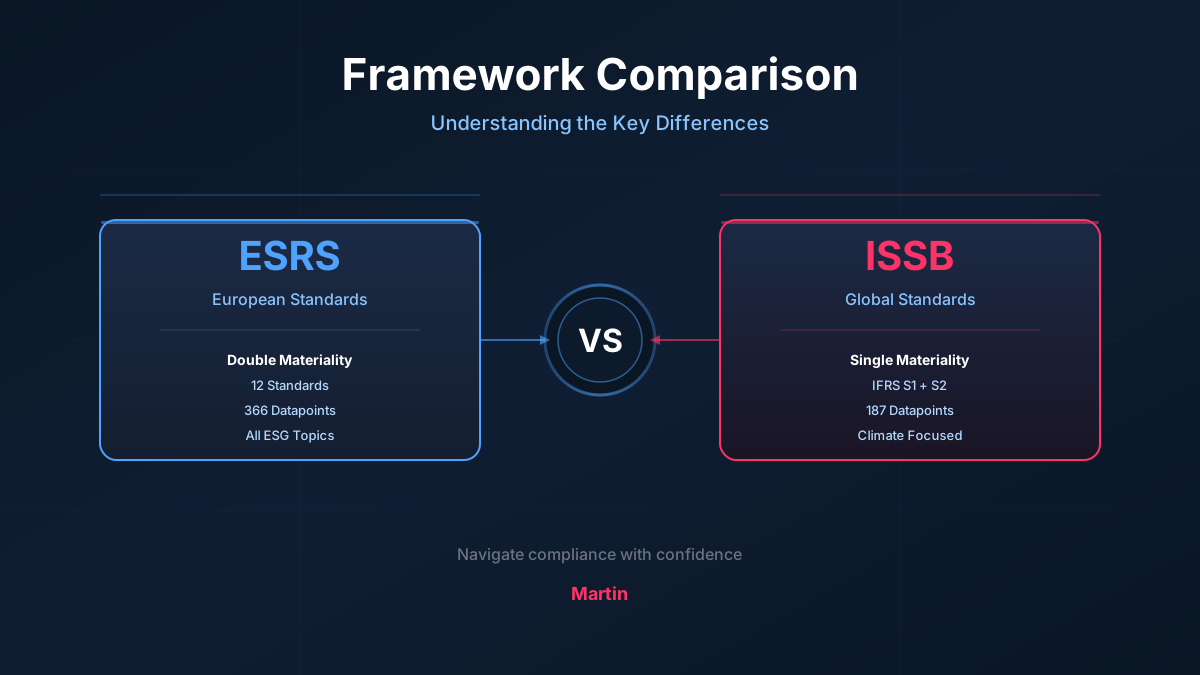
ESRS vs ISSB: Understanding the Two Major Sustainability Standards
A practical comparison of ESRS and ISSB frameworks post-Omnibus simplification, covering double vs single materiality and compliance strategies.
Martin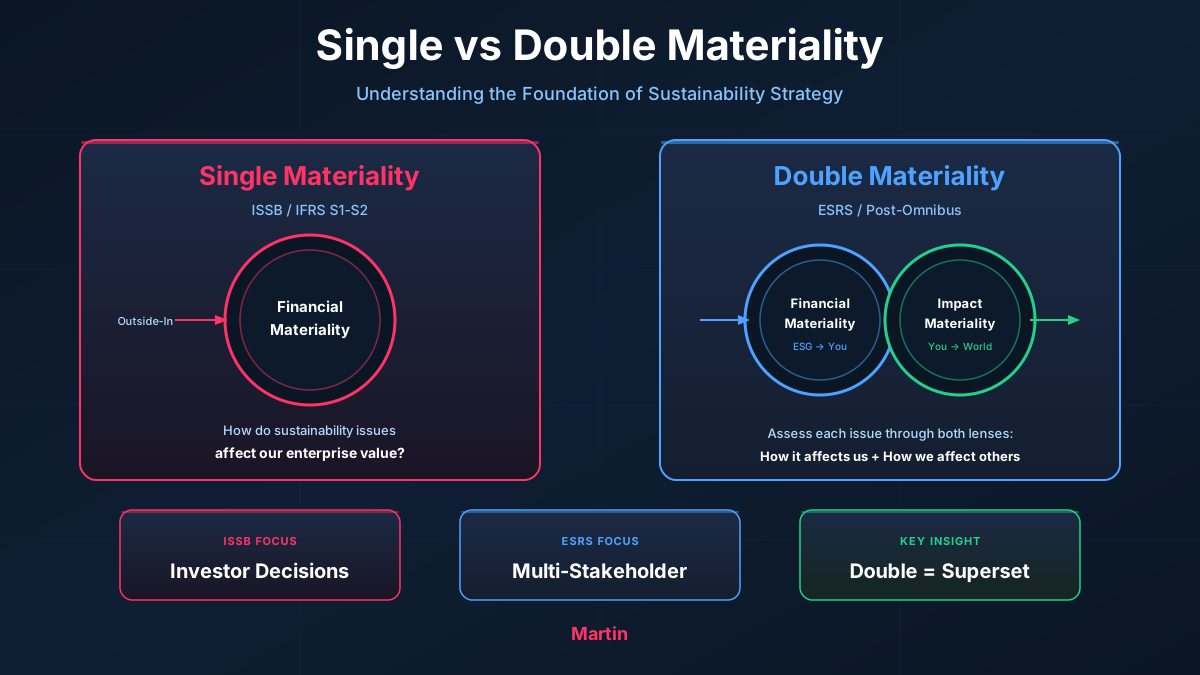
Single vs Double Materiality: A Practical Guide for Sustainability Reporters
Understanding the fundamental difference between ISSB's single materiality and ESRS's double materiality—and how each shapes your sustainability strategy.
Martin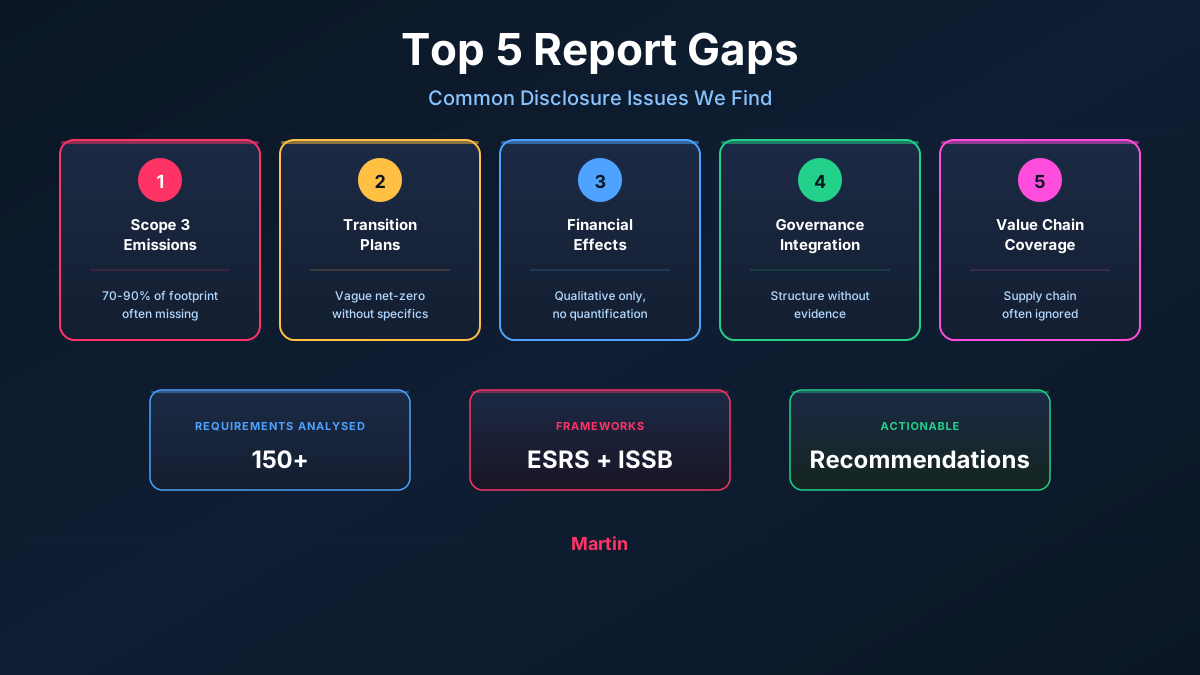
Top 5 Gaps We Find in Sustainability Reports
The most common disclosure gaps we identify when analysing sustainability reports against ESRS and ISSB requirements—and how to fix them.
Martin